Random Object Generator for Charades
A classic parlor game has the unique power to unite family members, close friends, and party guests through laughter, movement, and dramatic expression. Among these timeless activities, charades remains a universal favorite. However, the biggest roadblock to a smooth game night is always preparation. Spending hours writing down physical prompts on slips of paper or dealing with players who freeze up when thinking of what to act out can stall the momentum of your evening.
To solve this issue, modern party hosts use a digital random object generator for charades. By replacing handwritten notes with automated software, you can inject an element of unpredictable fun into your next gathering. Whether you are aiming for a high-intensity adult match or a lighthearted family evening, relying on specialized platforms like Random Object Generator and Randoms Object Generator provides an endless supply of fresh, creative prompts at the press of a button.
This comprehensive professional guide breaks down the core mechanics of utilizing a random object generator for charades, provides structured gameplay rules, and delivers a curated list of over 100 distinct object ideas optimized for various difficulty levels.
Why Use a Random Object Generator for Charades?
Traditional versions of charades often rely on movies, books, or famous celebrities. While these categories are excellent, they frequently alienate younger players or individuals who are not caught up on specific pop culture trends. Shifting the gameplay focus specifically toward tangible, real-world objects levels the playing field entirely. Everyone knows what an umbrella, a lawnmower, or a toaster looks like, but translating those physical items into silent pantomime requires deep creative thinking.
Integrating a digital random object generator for charades into your event workflow offers clear advantages:
- Eliminates Setup Stress: The host does not need to cut paper slips or hunt down functional pens. The software handles all prompt compilation.
- Guarantees Fairness: Since the words are drawn by a neutral algorithm, no player can be accused of cherry-picking easy or overly difficult prompts for specific teams.
- Prevents Creative Burnout: Players often struggle to think of good ideas on the spot under pressure. A rapid tap on a mobile device solves this instantly.
- Scales Across Age Demographics: Object-based prompts are intuitive for kids learning spatial awareness and highly entertaining for adults attempting to mimic complex machinery.
The Official Rules of Object-Based Charades
To host a flawless tournament using a random object generator for charades, it helps to establish clear, professional boundaries before the first round begins. Use this framework to manage your next game night.
Team Organization and Setup
Divide your total group into two balanced teams (Team A and Team B). Designate a central stage area where the active performer stands, ensuring they are clearly visible to everyone in the room. Position a digital screen, tablet, or smartphone displaying a platform like Random Object Generator right next to the stage, accessible only to the active actor and the opposing team’s designated timekeeper.
Round Mechanics
On a team’s turn, they select one representative to act as the performer. The performer walks up to the screen, taps the button on the tool to receive a secret object prompt, and nods to signal they are ready. The timekeeper starts a countdown timer—typically set to 60 or 90 seconds.
Communication Constraints
The performer must communicate the identity of the generated object using body movements, facial expressions, and physical gestures alone. The following actions are strictly prohibited:
- Making audible noises, whispers, hums, or vocal throat movements.
- Mouthing words silently to the audience.
- Drawing letters, numbers, or symbols directly in the air.
- Pointing directly at a physical object in the room to reveal the answer.
Scoring and Winning
If the performer’s teammates successfully guess the exact object name before the timer runs out, the team earns one point. If the clock hits zero before a correct guess, no points are awarded, and the turn passes over to the opposing team. Games are traditionally played over 3 to 5 full rounds, with the highest aggregate score taking home the victory.
Master Signaling Guide for Object Charades
When utilizing a random object generator for charades, some items might consist of multiple words or syllables. Performers can use standard non-verbal shorthand signals to establish context for their team right at the start of their turn:
- The Object Signal: To show the audience they are acting out a physical item, the performer can mimic holding a small box in their hands or outline a generic object shape.
- Word Count: Hold up fingers to indicate the total number of words in the prompt (e.g., two fingers for “vacuum cleaner”).
- Syllable Breakdown: Lay your fingers horizontally across your forearm to show how many syllables are in a specific word.
- The “Sounds Like” Gesture: Cup a hand behind your ear to tell your teammates that you are going to act out a word that rhymes with the target object name.
100 plus Curated Object Ideas to Act Out
To give you an immediate foundation before jumping over to live generation tools, here is a structured collection of over 100 physical objects. They are divided into distinct categories and difficulty tiers to match your specific guest list.
Beginner Level: Household Items (Easy)
These everyday objects are ideal for children, beginners, or fast-paced warmup rounds. They feature clear shapes and obvious real-world uses that are easy to mimic physically.
- Toothbrush
- Telephone
- Umbrella
- Pillow
- Television Remote
- Scissors
- Hairdryer
- Backpack
- Coffee Mug
- Wristwatch
- Broom
- Sunglasses
- Hammer
- Key
- Frying Pan
- Calculator
- Blanket
- Flashlight
- Computer Mouse
- Mirror
- Headphones
- Guitar
- Camera
- Alarm Clock
- Bicycle
Intermediate Level: Tools, Tech, and Outdoor Objects (Medium)
These prompts require a bit more physical coordination and abstract thinking. Players must often act out how the object interacts with an environment or how a person operates it.
- Lawnmower
- Stethoscope
- Fishing Pole
- Drone
- Toaster
- Microscope
- Blender
- Skateboard
- Typewriter
- Vacuum Cleaner
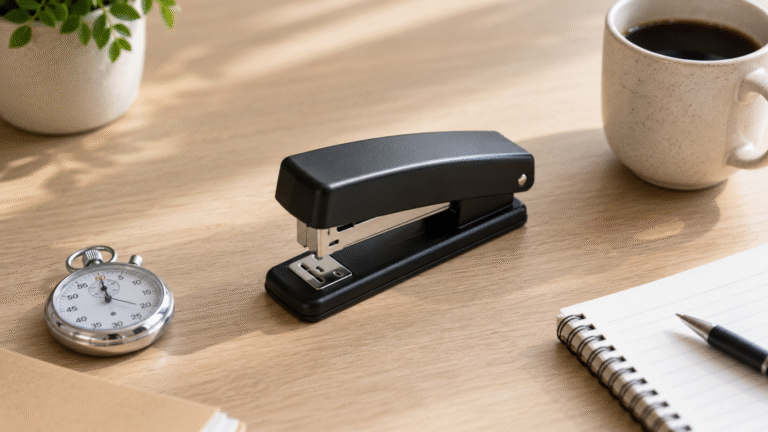
- Stapler
- Sewing Machine
- Watering Can
- Binoculars
- Telescope
- Sleeping Bag
- Stepladder
- Tape Measure
- Compass
- Thermometer
- Suitcase
- Fire Extinguisher
- Corkscrew
- Hair Straightener
- Wheelbarrow
Advanced Level: Complex and Mechanical Objects (Hard)
These prompts are tailored for seasoned veterans. Acting out these items requires breaking down mechanical movements, drawing dimensions in the air, or utilizing clever metaphorical gestures.
- Helicopter
- Wind Turbine
- Espresso Machine
- Photocopy Machine
- Submarine
- Satellite Dish
- Hot Air Balloon
- Chainsaw
- Hoverboard
- ATM Bank Machine
- Vending Machine
- Record Player
- Grand Piano
- Slot Machine
- Microscope
- Treadmill
- 3D Printer
- Escalator
- Parachute
- Traffic Light
- Pinball Machine
- Megaphone
- Jackhammer
- Pendulum Clock
- Compass Rose
Themed Bonus Tier: Vehicles and Sports Gear
Great for energetic players who prefer high-movement pantomime and dramatic full-body acting.
- Rollerblades
- Kayak
- Surfboard
- Bowling Ball
- Pogo Stick
- Golf Club
- Ice Skates
- Trampoline
- Unicycle
- Dumbbell
- Hockey Stick
- Ping Pong Paddle
- Boxing Gloves
- Sailboat
- Bulldozer
- Forklift
- Tractor
- Motorcycle
- Hot Tub
- Jet Ski
- Snowmobile
- Shopping Cart
- Wheelchair
- Helicopter
- Spaceship
- Submarine
- Fire Truck
Advanced Gameplay Variations
If your group masters the standard rules, you can use a random object generator for charades to power unique, custom gameplay modes that elevate the challenge and keep people fully engaged.
The Rapid-Fire Chain Mode
Instead of a single turn consisting of one prompt, set a longer countdown timer of 120 seconds. The active performer stands by a tablet running Randoms Object Generator. As soon as their team guesses the first object, the performer immediately taps the screen to generate a new object. The goal is to successfully act out and guess as many distinct objects as humanly possible before the two minutes expire.
The Double-Object Hybrid Challenge
In this advanced format, the performer must tap the tool twice to generate two completely unrelated objects. They must then find a way to combine both items into a single, seamless physical routine. For example, if the tool outputs “Umbrella” and “Skateboard,” the actor must mime riding a skateboard while holding up an umbrella against a storm.
The Restricted Motion Variant
For a hilarious twist that forces players to rely entirely on facial expressions and minimal torso movements, enforce a rule where the performer must remain seated in a chair with their feet planted flat on the floor throughout their entire turn. They cannot stand up, walk around, or use their lower body to convey details about the object.
Step-by-Step Guide to Hosting a Charades Event
To organize a smooth, hassle-free party event that feels incredibly professional, follow this simple developmental timeline.
1. Optimize Your Space
Arrange the seating in a semi-circle or two distinct group blocks facing a clear central area. This ensures everyone has a perfect line of sight to the performer and can catch subtle finger signals or facial movements.
2. Prepare the Digital Interface
Load up a reliable generation utility like Random Object Generator on a mobile phone or tablet. Ensure the device’s screen auto-lock setting is turned off so the page stays active and bright throughout the duration of the tournament matches.
3. Conduct a Practice Turn
Before tracking points, run a quick zero-stakes demonstration round. Have one volunteer step up, click the tool, and act out a basic object. This ensures all participants understand the communication rules and the timing format.
4. Track Scores and Keep Time Cleanly
Assign one dedicated individual to act as the permanent referee and official timekeeper. Using a physical stopwatch or a visible countdown clock app keeps the game moving at an exciting, energetic pace and prevents scoring disputes.
Frequently Asked Questions
What makes an object generator better than a standard word generator for charades?
A standard word list often contains abstract concepts, verbs, or adjectives like “freedom,” “running,” or “beautiful,” which can be incredibly frustrating to act out without standard sign language. A random object generator for charades guarantees that every single prompt is a concrete, physical item. This makes the game highly visual, fair, and accessible to a much broader age range.
How do we handle regional names for generated objects?
If the automated system displays an item that goes by different names depending on where your guests are from—such as an “elevator” versus a “lift,” or a “flashlight” versus a “torch”—the referee should award the point as long as the guesser clearly understands the correct physical item being pantomimed.
Can you play this game over online video calls?
Yes, a random object generator for charades is perfectly suited for virtual events, remote team-building sessions, or long-distance family gatherings over Zoom or Microsoft Teams. The host can privately message the generated prompt to the active performer using the direct chat feature. The performer then stands back from their webcam so their full body is visible to the rest of the virtual call participants.
What should an actor do if they do not know what the generated object is?
If a platform like Randoms Object Generator outputs an obscure or highly specific item that the performer does not recognize, they are allowed one skip per turn. They can rapidly tap the button again to generate an alternative object without suffering a point penalty.
How can we make the game easier for very young children?
To accommodate toddlers or early elementary students, allow them to make realistic sound effects associated with the object during their turn, such as saying “vroom vroom” while acting out a car, or “tick tock” for an alarm clock. This structural modification keeps the game fun and prevents younger players from feeling overwhelmed by the strict silence rule.