Table of Contents
The 60-Second Object Speech
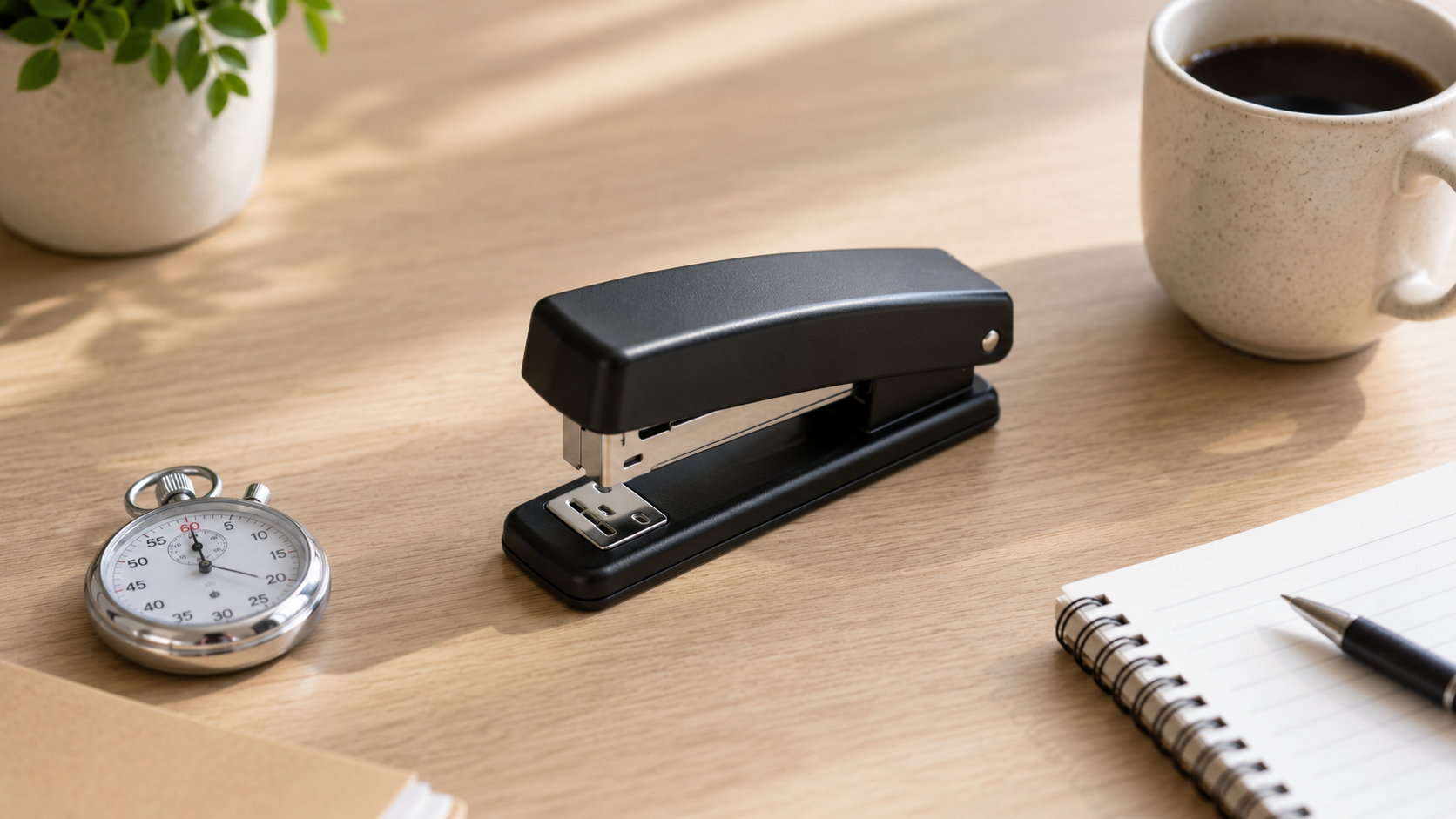
Pick up whatever is closest to you right now — a mug, a phone charger, a stapler. Now imagine someone hands you that object and says, “Talk about this for one minute. Go.”
This is one of the oldest tricks in public speaking training, and almost nobody outside Toastmasters clubs and debate coaches seems to know it exists. It doesn’t need a topic list, a whiteboard, or a workshop. It needs one random object and sixty seconds.
What an Object Speech Actually Is
An object speech (sometimes called an “object talk” or, in sales training, “sell the object”) is a short, unscripted speech built entirely around a physical item you didn’t choose and didn’t prepare for. Someone hands you a rubber band, a candle, a garden trowel — anything — and you have to make it interesting out loud, with no notes.
It’s different from a normal impromptu speech topic like “describe your favorite holiday,” because a topic gives your brain something to search its memory for. An object gives your brain nothing familiar to grab onto. You have to build the speech from the object outward: what it does, what it reminds you of, why it matters, what would happen if it didn’t exist. That’s a harder — and more useful — mental workout.
Toastmasters clubs have run versions of this for decades under names like “Table Topics with props.” Drama teachers use it to warm up improv students. Sales trainers use it because pitching a random object under time pressure is uncomfortably close to pitching a real product to a skeptical client.
Why It Works Better Than a Topic List
Most impromptu speaking tools throw a topic at you — “talk about climate change” or “describe your dream vacation.” The problem is that popular topics get memorized. Speakers build a mental library of go-to answers and stop actually improvising.
A random physical object breaks that shortcut. Nobody has a pre-written answer for “the aesthetic and emotional significance of a rubber spatula.” You’re forced to think in real time, structure an answer on the fly, and speak with confidence about something you have zero prior opinion on. That’s the actual skill impromptu speaking is supposed to build — and it’s why the object version is the harder, more respected drill among speech coaches, even though it gets a fraction of the attention topic generators get.
How to Run the Drill (Solo or in a Group)
You don’t need props lying around or a partner to make this work.
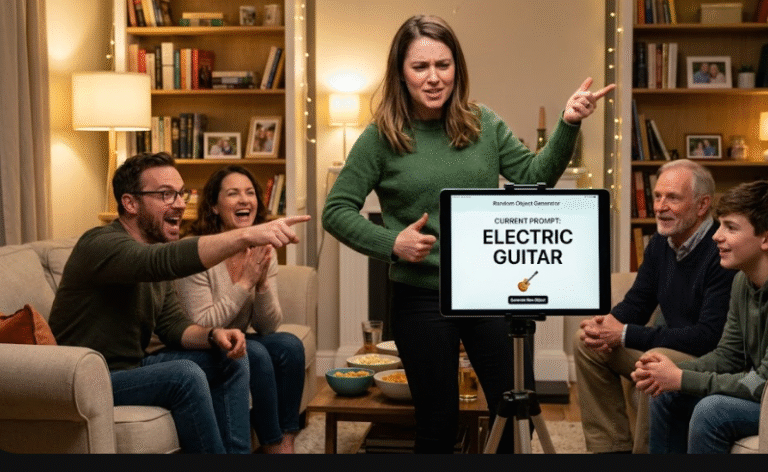
Step 1 — Generate an object. Use a random object generator instead of grabbing whatever’s on your desk. Real Table Topics sessions use objects nobody in the room chose in advance — that’s what keeps it honest. Set it to generate one object at a time so you’re not tempted to pick your favorite.
Step 2 — Set a short timer. 30 seconds for a warm-up, 60 seconds for a real drill, 2–3 minutes if you’re more advanced. Shorter is better when you’re starting out; the goal is fluency, not depth.
Step 3 — Give yourself 10 seconds of prep, no more. Real impromptu speaking doesn’t come with a planning phase. Ten seconds is enough to grab one angle — a story, a function, a comparison — without over-scripting.
Step 4 — Speak using one simple structure. A structure everyone can use under pressure: Point → Reason → Example → Point. State one thing about the object, explain why it matters, give a quick example or story, then land back on your point. It sounds simple because it is — that’s why it works when your brain is half-panicking.
Step 5 — Repeat with a new object immediately. Don’t stop to critique yourself after one round. Generate the next object and go again. Fluency comes from repetition, not from perfecting a single attempt.
Who Actually Uses This
- Toastmasters members and club officers running Table Topics sessions who want a prop-based twist instead of the usual question cards
- Teachers and debate coaches looking for a two-minute warm-up that doesn’t require printing anything
- Job seekers prepping for interviews, since “describe this to me” is a real interview curveball at companies that test communication skills
- Salespeople practicing pitch structure on objects that have nothing to do with what they actually sell
- Anxious speakers who find topic-based prompts too “safe” and want something that forces true improvisation
Turning It Into a Group Game
If you’re running this with a class, a club, or even a few friends, it scales easily:
- Round robin: everyone gets the same object, one after another, and the group votes on the most creative angle.
- Elimination: miss your ten-second prep window or freeze for more than five seconds, and you sit out the round.
- Theme constraint: generate the object, then also require the speech to be persuasive, funny, or nostalgic — stacking two skills into one drill.
Frequently Asked Questions
What is an object speech in public speaking? It’s a short, unprepared speech given about a random physical object rather than a chosen topic, used to train quick thinking and structured delivery under pressure.
How long should an object speech be? Beginners should start at 30–60 seconds. More experienced speakers can push to 2–3 minutes once the basic structure feels automatic.
Is this the same as Toastmasters Table Topics? It’s a variation of it. Standard Table Topics usually hands out a question or topic; the object version replaces the topic with a physical item, which removes the option of relying on a memorized answer.
Do I need real physical objects for this to work? No. A random object generator works just as well, and it’s actually closer to how the exercise is meant to be run — the object should be something you had zero say in choosing.
Can this help with interview prep? Yes. Some interviewers deliberately ask candidates to describe or “sell” a random object on the desk to see how they handle unscripted communication — practicing this drill beforehand makes that moment far less jarring.
What’s the easiest speech structure to use under pressure? Point, Reason, Example, Point (PREP). State your idea, back it up, give a quick example, then restate the idea to close. It’s short enough to remember even when you’re nervous.